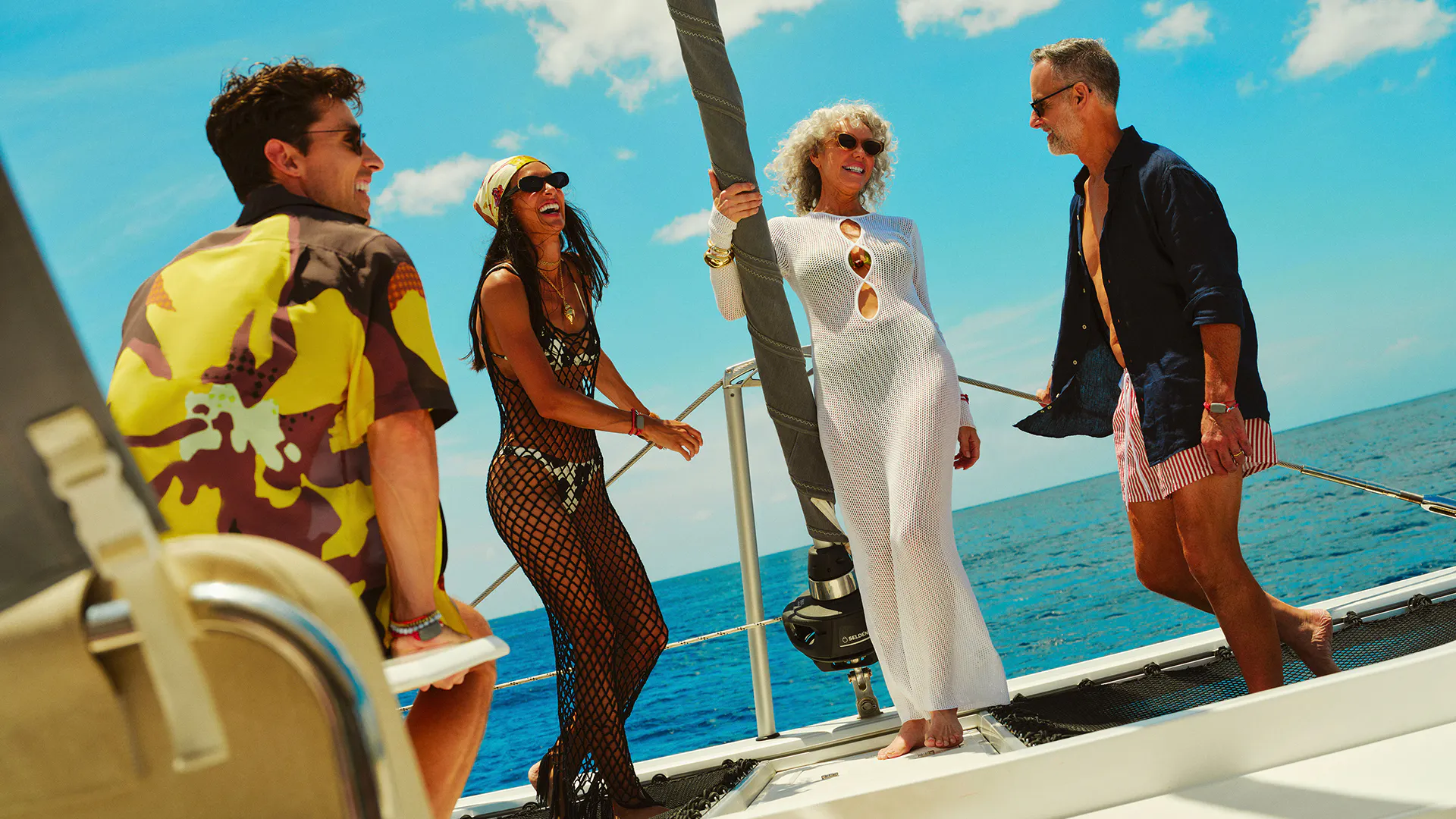
There's a reason you step off a ship feeling like a better version of yourself. Lighter. Clearer. Oddly rested, even if you stayed up until 2 am at The Manor (our onboard dance hub). This feeling isn't just the cocktails and the sea breeze; it's your brain, doing something genuinely different the moment land disappears from view.
Neuroscience and environmental psychology have spent years catching up to what Sailors already know intuitively: the ocean changes you. Here's what's actually happening inside your head when you're out there, seeing the world from our kid-free luxury ships.
Blue space does something land can't
Researchers use the term "blue space" to describe any natural water environment, and the evidence for its effect on mental health is compelling. Studies consistently show that time near, on, or around water reduces cortisol levels, lowers heart rate, and activates the parasympathetic nervous system — the one responsible for rest and recovery.
On land, your brain is constantly processing stimulation: notifications, traffic, deadlines, the ambient hum of being reachable. At sea, that input drops sharply. The visual field opens up. The horizon is steady. Your nervous system, finally given permission to exhale, takes it.
This isn't relaxation as a feeling. It's relaxation as a measurable physiological state.
Your default mode network gets a proper rest
When you're not actively focused on a task, your brain shifts into what neuroscientists call the default mode network—a kind of background processing state associated with daydreaming, self-reflection, and creative thinking. The problem is that modern life rarely lets it run properly. Constant stimulation keeps interrupting it.
At sea, something shifts. The gentle, rhythmic motion of a ship—the kind you barely notice after the first hour—creates a low-level sensory environment that's just engaging enough to quiet the noise without demanding attention. Your default mode network gets the uninterrupted time it rarely gets on land.
This is why so many people report having their best ideas on a cruise. It's not coincidence. It's neurology.
The sound of water is genuinely calming
The ocean isn't quiet, but it's the right kind of loud. Research into auditory environments shows that non-threatening, rhythmic, natural sounds—waves, water movement, wind—trigger relaxation responses in the brain more reliably than silence.
White noise machines try to replicate this. They don't come close.
When you're on deck watching the water move, or falling asleep in a sea terrace cabin with the hum of the ocean outside, your auditory cortex is processing sound in a fundamentally different way than it does in an office, a city, or a busy airport. The brain reads it as safe. And when the brain feels safe, everything else follows.
Time perception changes at sea
Ask anyone who's sailed and they'll tell you: days feel longer. Not in a boring way. In the way that a really good day feels long because you were actually present for all of it.
There's a well-documented link between novel experiences and the perception of time. When your brain encounters new environments, new flavors, new people, and new places in quick succession, it encodes more memories per unit of time. The result is that a week at sea can feel richer and more expansive than a month of ordinary routine.
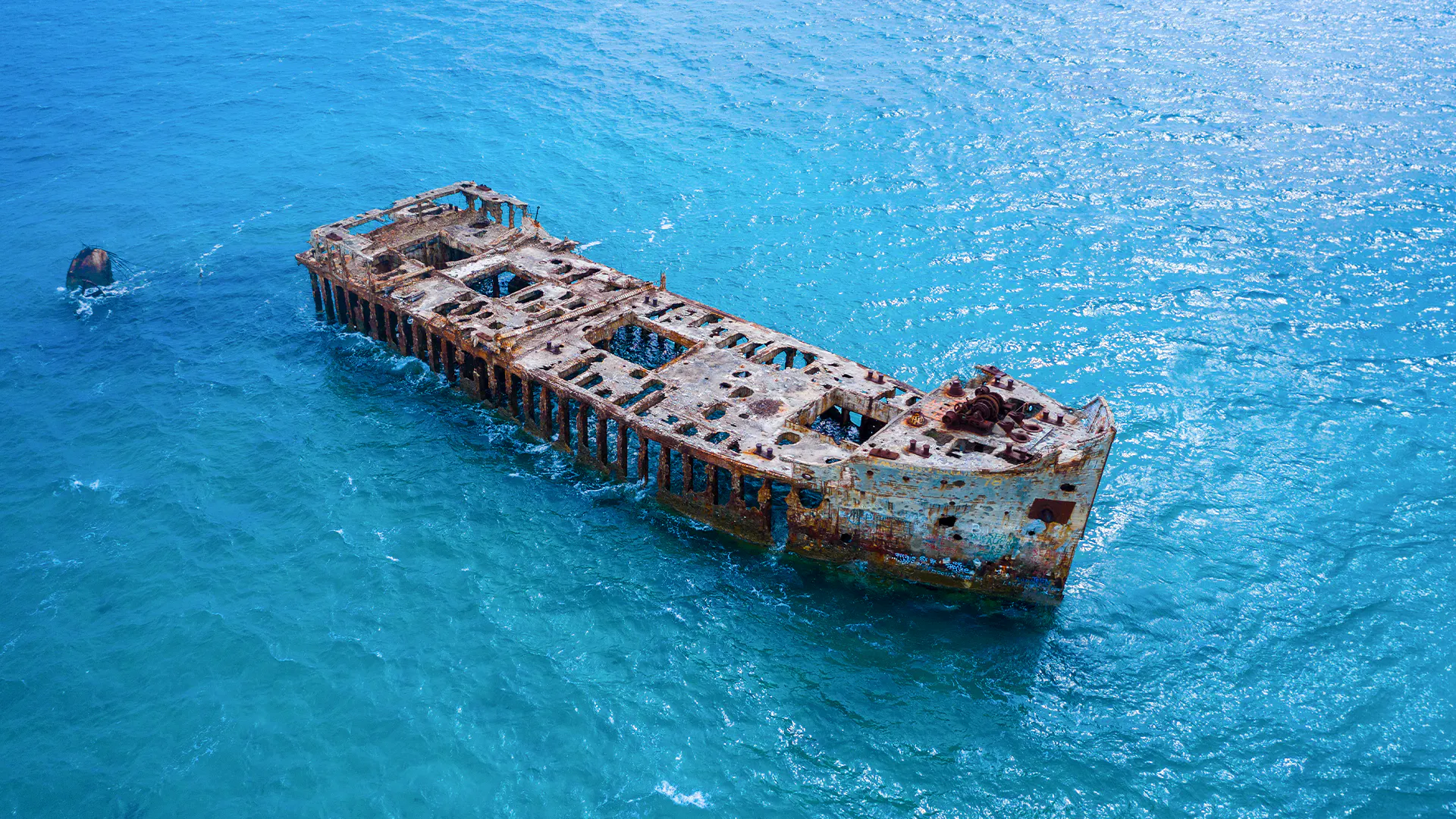
On a Virgin Voyages voyage, that novelty is stacked deliberately (and included in your voyage fare). World-class dining across 20-plus eateries. Ports that shift every day or two. Entertainment that doesn't repeat. Shore experiences (we call them Shore Things) that are genuinely unexpected. Your brain is taking it all in, and it's filing it carefully.
Social connection rewires your stress response
Isolation is one of the most consistent predictors of poor mental health. Its opposite—genuine, easy, unforced social connection—has the reverse effect. Oxytocin rises. Stress hormones fall. The brain's threat-detection systems calm down.
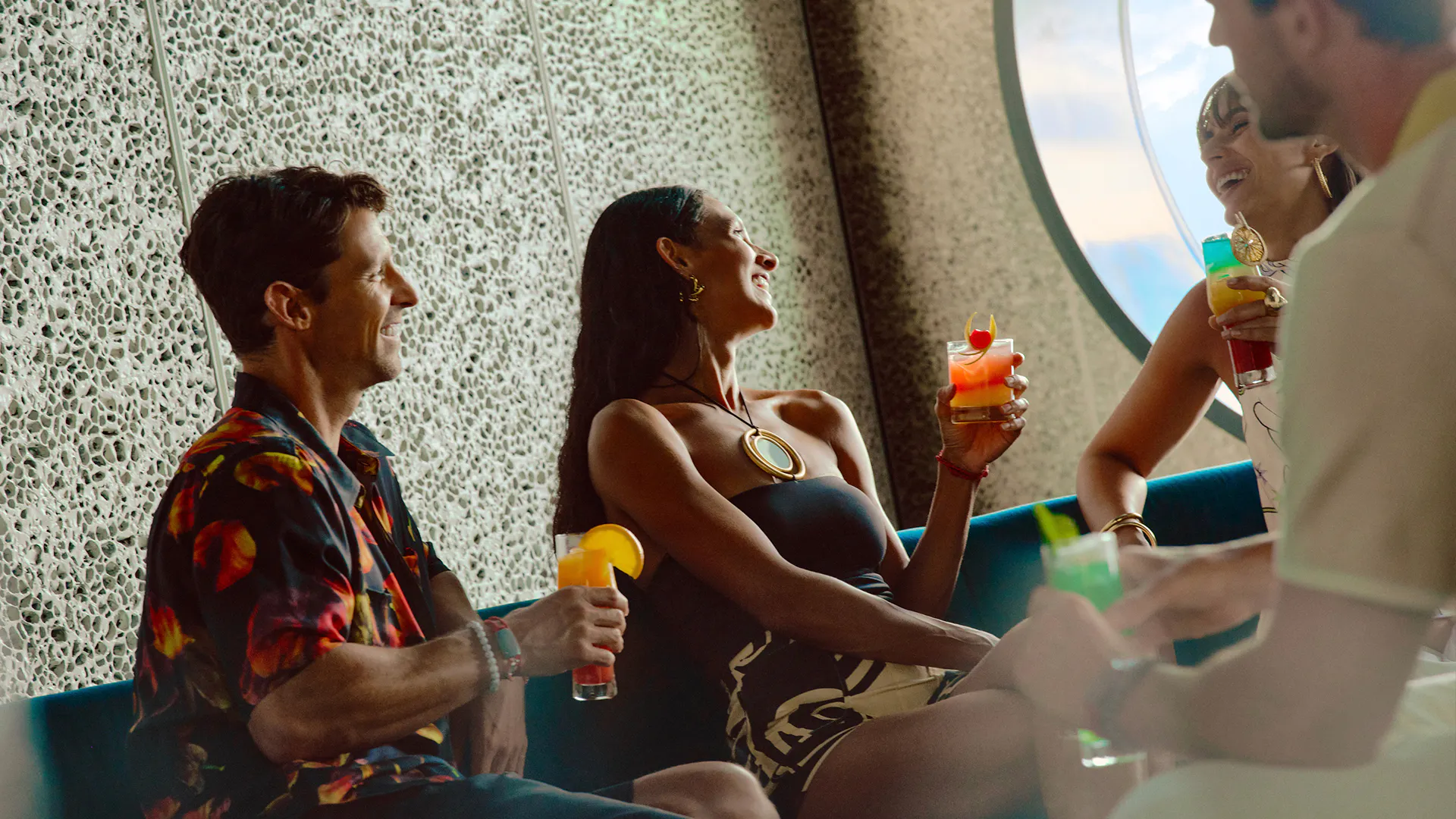
A ship is a uniquely social environment. Not in a forced, name-tag-at-a-conference way. In the way that good bars, good restaurants, and good company make conversation feel effortless. On our adults-only ships, the Sailor-to-crew ratio sits at 2.5 to one, which means the experience is attentive without being overwhelming. And because there are no children on board, the social atmosphere skews toward people who are there to be present, connect, and actually enjoy themselves.
That environment is not incidental. It's engineered.
Novelty and reward are deeply linked
Every new port, every new dish, every first glimpse of a coastline you've never seen before triggers a dopamine response. Dopamine isn't just the "pleasure chemical"—it's the brain's signal for learning, motivation, and reward. New experiences don't just feel good. They build new neural pathways.
Travel, and particularly sea travel, is one of the most effective ways to keep the brain genuinely stimulated as we age. The combination of physical movement, sensory variety, social engagement, and environmental change is almost unbeatable.
The feeling you're chasing has a name
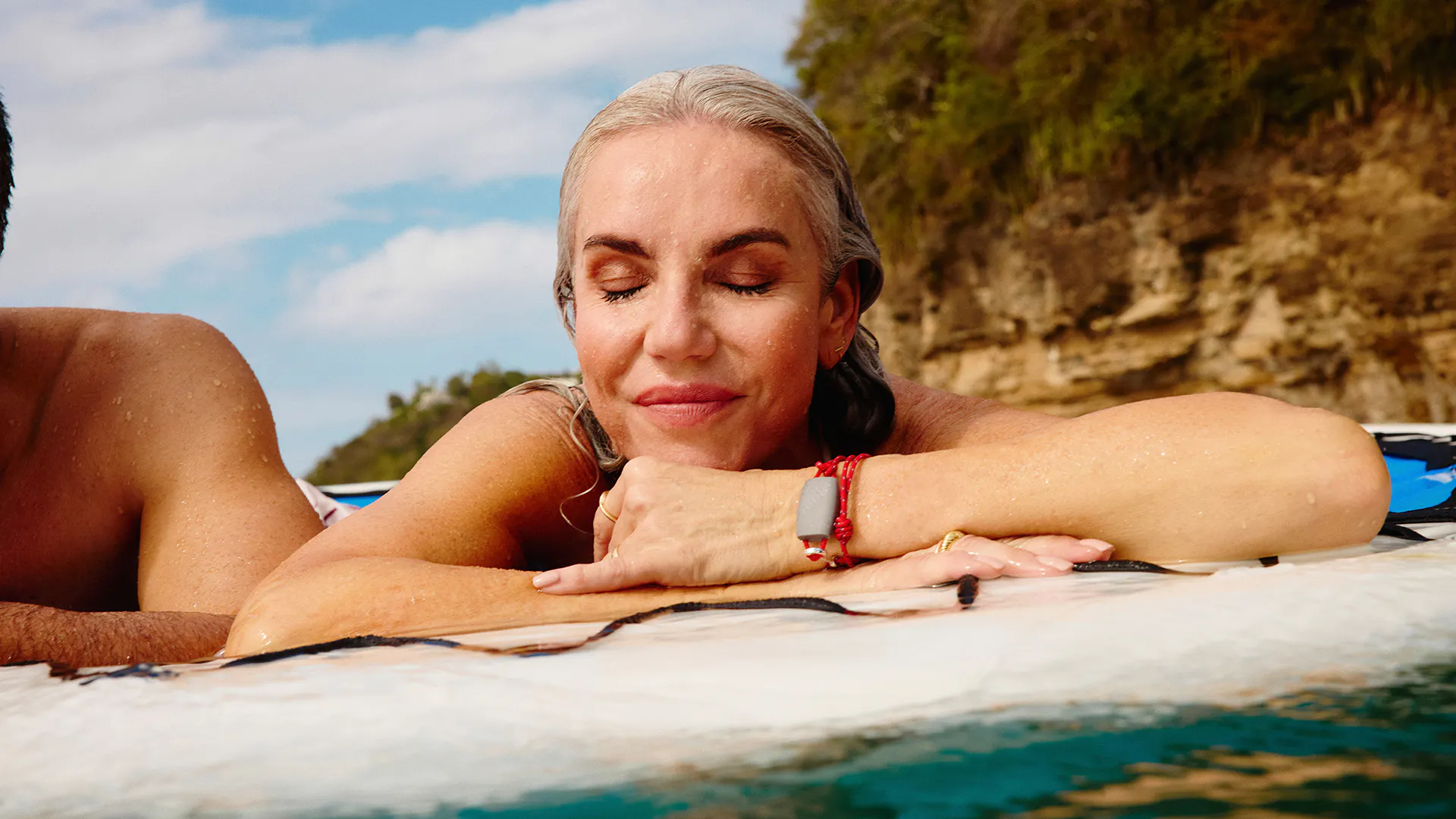
"Blue mind" is the term coined by marine biologist Wallace J. Nichols to describe the mildly meditative state the brain enters near water. It's characterized by calm, creativity, and a sense of being fully present. It's not mystical. It's measurable.
And it's exactly what happens when you're standing at the bow of Scarlet Lady watching the Caribbean come into view, or sitting on your sea terrace as the Mediterranean turns gold at dusk.
The ocean doesn't just look good. It's good for you.
Ready to give your brain what it's been asking for?
The science is solid. The experience is better. Whether you're drawn to the Caribbean, the Mediterranean, or somewhere further afield, a Virgin Voyages voyage gives your brain the space, the novelty, and the sensory richness it rarely gets on land. Explore our fleet of adults-only ships and find the sailing that calls to you.