Let’s talk about cruise health headlines. If you’ve ever Googled “cruise illness” before booking a sailing, you’re not alone. A quick scroll through headlines or social chatter can make it seem like cruise ships are constantly battling outbreaks. But here’s the thing most of those stories leave out: cruises are talked about so openly because they’re monitored more closely than almost any other vacation you can take.
That visibility isn’t a red flag. It’s a safety feature.
So let’s clear the air, unpack why cruise health stories get so much attention, and explain why cruising, especially modern cruising, is widely considered one of the safest ways to travel.
Why cruise illness stories make headlines
Cruise ships operate under a level of public health oversight that hotels, resorts, and other travel environments simply don’t. In the United States, cruise lines participate in the CDC’s Vessel Sanitation Program (VSP), a long-standing public health initiative focused on preventing and controlling gastrointestinal illness on ships.
The VSP requires routine inspections, sanitation scoring, illness reporting, and public transparency. You can see this structure clearly on the CDC’s official VSP overview page.
When something happens onboard, it’s documented and shared publicly. That doesn’t mean it’s common. It means it’s accountable.
Land-based travel doesn’t work the same way. Hotels and resorts are not required to publicly report illness data. Neither are airlines, theme parks, or large events. Cruise ships stand out not because they’re riskier, but because they’re transparent by design.
What CDC VSP data actually tells us
The CDC’s Vessel Sanitation Program exists to prevent illness, not to alarm travelers. Its entire purpose is early detection and rapid response.
According to the CDC, reporting thresholds are intentionally set low so that even small clusters of illness are flagged quickly. This allows cruise operators to intervene early and prevent further spread. The CDC explains this reporting process and threshold logic directly on its VSP outbreak guidance pages.
A few important things that often get missed in headlines:
- Many reported cases involve mild, short-term symptoms
- An “outbreak” classification does not mean uncontrolled spread
- Public reporting exists to build trust and accountability
- Early intervention is the goal, not damage control
In short, the system is working exactly as intended.
Are cruises actually safe from illness?
Short answer: yes.
Cruise ships are among the most regulated travel environments in the world. Beyond CDC oversight in the U.S., cruise lines follow international health guidance from organizations like the World Health Organization, particularly around sanitation, food safety, and disease prevention.
Onboard, ships operate as controlled environments with:
- Dedicated medical centers
- Licensed medical professionals available 24/7
- Strict food handling and preparation standards
- Continuous cleaning of high-touch surfaces
- Air filtration systems designed for enclosed, high-traffic spaces
Unlike many land vacations, cruise ships can monitor health trends in real time and respond immediately when patterns emerge. That ability to act quickly is one of the biggest reasons cruising remains a low-risk option for travelers.
Why modern cruising looks nothing like the myths
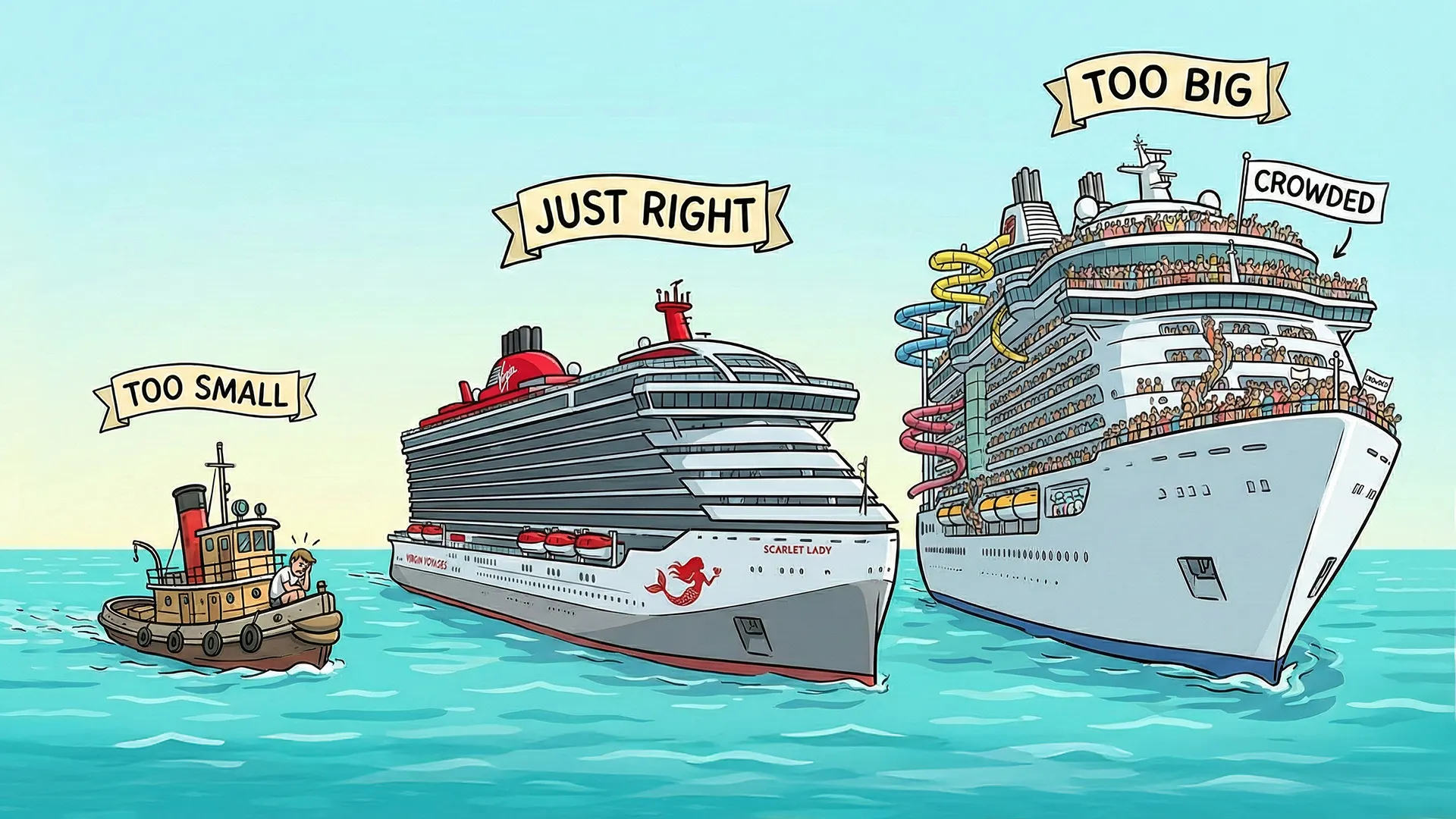
Many cruise health fears come from outdated perceptions. Images of crowded buffets, packed dining rooms, and shoulder-to-shoulder decks don’t reflect how modern ships operate today.
Across the industry, ships are designed with improved airflow, better sanitation infrastructure, and more intentional guest flow. Dining models have evolved. Cleaning protocols are constant. Health practices are integrated quietly into daily operations.
Cruising has changed. The conversation around it just hasn’t always caught up.
What makes Virgin Voyages especially reassuring
Virgin Voyages was designed from day one to feel different, and that includes how health and well-being are approached onboard.
A few design choices that naturally reduce risk:
- Adult-only sailings, which lower exposure to common childhood illnesses
- No buffets, meaning less shared contact and fresher, made-to-order dining
- Lower capacity compared to traditional cruise ships
- Modern ship layouts with space, airflow, and cleanliness in mind
- Crew trained to focus on prevention, not reaction
These aren’t add-on protocols. They’re part of how the experience works.
The bottom line on cruise health
Cruise illness headlines can feel alarming without context. But once you understand why they exist and how cruise health monitoring actually works, the picture becomes much clearer.
Cruising isn’t unsafe. It’s regulated. It’s transparent. And it’s designed to identify and manage health concerns faster than most vacations on land.
For travelers who value peace of mind as much as adventure, that level of oversight is something to feel good about.
Vacations should make you feel excited, not anxious. When you look beyond the headlines and into the data, cruising stands out as one of the most thoughtfully managed ways to travel. With strict standards, public accountability, and modern ship design, cruise vacations continue to offer confidence alongside escape. And on Virgin Voyages, it all happens without sacrificing the fun.