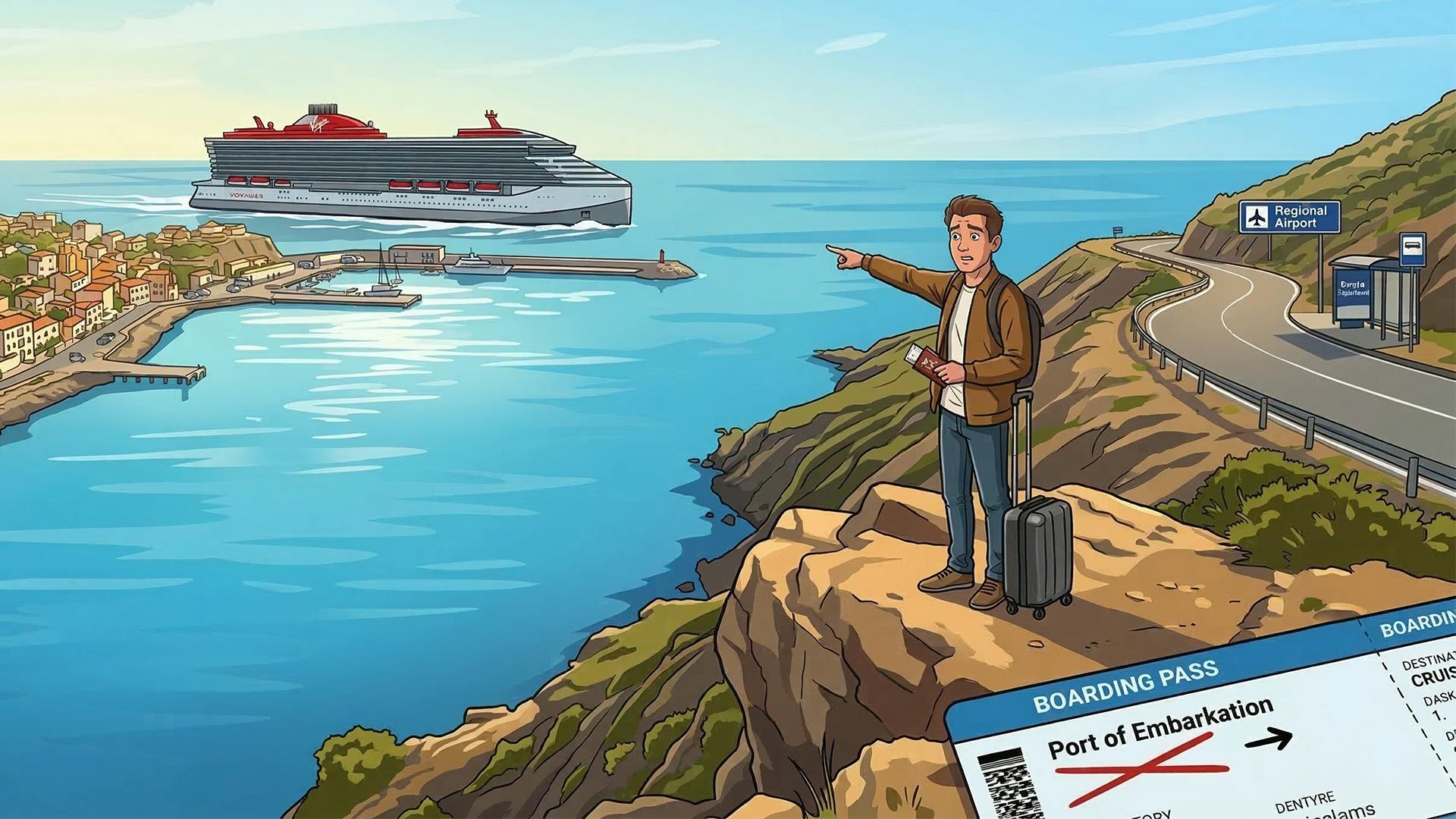
Cruises don’t quite work like flights with connections. Once a sailing begins, it’s designed to unfold from start to finish, with every Sailor boarding at the same place: the embarkation port. But travel isn’t always predictable. Flights get delayed. Luggage disappears. Life occasionally throws a curveball that makes you wonder: can you join a cruise late?
First, a quick definition. The embarkation port, sometimes called the port of embarkation, is the home port where your cruise officially begins. It’s where Sailors check in, board the ship, and start their voyage.
Most cruises expect every passenger to board at that original port of embarkation. Mid-cruise boarding, sometimes called “downlining,” is rare and tightly regulated. In many cases, it isn’t allowed at all.
Still, there are limited situations where boarding at the next port or a later stop may be possible. The catch? It requires advance approval, proper documentation, and coordination with the cruise line. And even then, permission is never guaranteed.
Here’s how embarkation ports work, when mid-cruise boarding might be allowed, and what happens if you miss the ship. (If you do, by some chance, miss your ship in the Caribbean or the Med, you can use our handy port guides in those links to show you how to pass the time.)
What is a port of embarkation?
The port of embarkation is the starting point of your cruise. It’s the home port where passengers board the ship on day one and begin their sailing. For most itineraries, it’s also where the cruise ends. You’ll disembark in the same city where you started. (This isn't the case if you're on, for example, one of our transatlantic cruises.)
Along the journey, the ship will visit several destinations known as ports of call. These are the places where the ship docks temporarily so Sailors can explore ashore before returning on board.
So in simple terms:
- Port of embarkation: where the cruise begins
- Port of call: destination stops during the voyage
Some cruises are closed-loop cruises, meaning they begin and end at the same U.S. port. Others are open-jaw itineraries that start and finish in different cities.
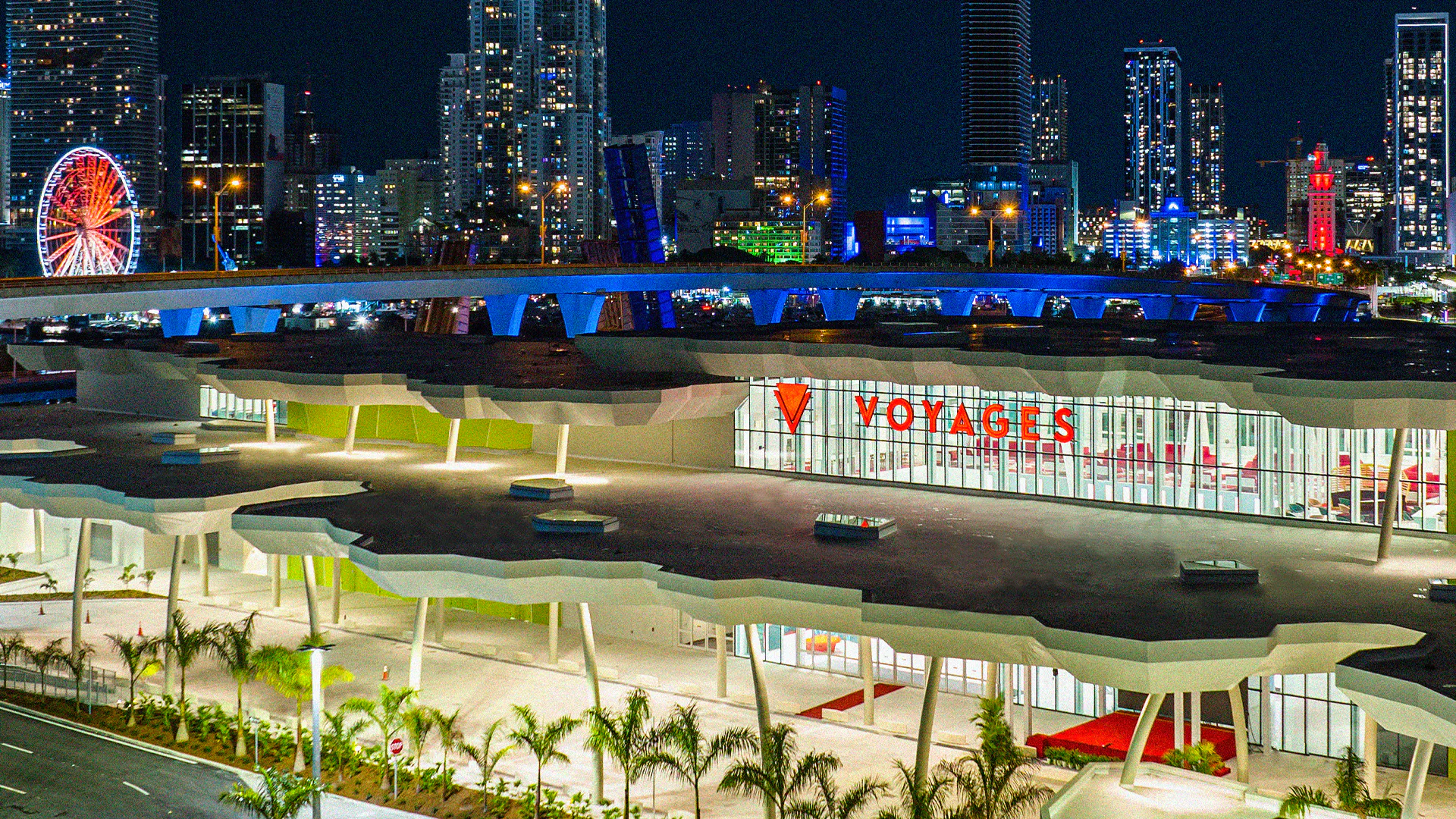
If you’re curious about where your voyage begins, Virgin Voyages shares detailed embarkation guidance on its Port Information page. You can also learn more about documentation rules for roundtrip sailings in our guide to closed-loop cruises.
Understanding the port of embarkation is important, because cruise regulations and immigration rules are tied to where the journey officially begins.
Can you join a cruise late?
Short answer: usually no.
Most cruise lines require passengers to board at the original port of embarkation. Unlike airlines, cruises aren’t built around connections or mid-journey boarding.
However, there are rare situations where joining late may be possible. This process is often called downlining, which means boarding the ship at a later port after the cruise has already started.
If allowed, it requires several conditions:
- Special advance permission from the cruise line
- Coordination with the ship’s itinerary and port authorities
- Proper travel documentation
- Often a valid passport if boarding internationally
Even then, approval is handled strictly on a case-by-case basis. Situations where cruise lines may review a request include:
- Missed embarkation due to flight delays
- Disrupted connecting flights
- Personal emergencies affecting travel plans
- Complex itineraries or longer sailings
On rare occasions, travelers who miss their ship have successfully boarded at the next port. For example, one Virgin Voyages Sailor shared on Reddit how they missed embarkation but were able to coordinate with us and board at the next port after arranging travel and documentation. We love our Sailors, and our Sailor Services team is happy to do the most we can to make things work — but these cases are the exception, not the rule. Cruise lines must coordinate immigration authorities, port officials, and onboard security before allowing any mid-cruise boarding.
Boarding at the next port or subsequent ports
Boarding at the next port may sound simple, but maritime regulations make it complicated.
One of the biggest legal factors for cruises sailing from the United States is the Passenger Vessel Services Act (PVSA). This law governs how passengers can embark and disembark between U.S. ports.
In simple terms, the PVSA prevents cruise ships from transporting passengers directly between U.S. ports unless the itinerary includes a foreign stop. Because of this rule, mid-cruise boarding often creates legal complications. If a passenger boards or leaves the ship at the wrong point, it could violate maritime cabotage laws.
Other factors also come into play:
- Customs and immigration processing
- Port security clearance
- Ship manifest requirements
- International documentation checks
This is why boarding at a foreign port of call, boarding at the next port, or joining at subsequent ports requires careful coordination. In many cases, it just isn’t allowed.
When is mid-cruise boarding more likely?
While rare, mid-cruise boarding becomes slightly more feasible on longer itineraries. Long cruises, extended cruises, and transatlantic cruises may occasionally allow partial cruise boarding because their schedules include many international ports and longer sailing windows.
Examples where cruise lines may sometimes allow it include:
- Transatlantic repositioning voyages
- Extended regional itineraries
- World cruises
- Multi-week sailings with complex routing
On these voyages, cruise lines may sometimes arrange planned mid-itinerary embarkation points in advance. This allows travelers to join for a segment of the sailing rather than the entire voyage.
Even in these cases, the same rules apply:
- Approval must be granted by the cruise line
- Documentation must meet immigration requirements
- It must comply with PVSA and other maritime laws
And again, it’s never considered standard practice.
Virgin Voyages’ policy on embarkation ports
Virgin Voyages is transparent about embarkation requirements and documentation rules for every sailing; they're outlined on our official Port Information FAQ page.
Sailors are expected to board at the designated port of embarkation listed on their itinerary. If exceptional circumstances occur, such as travel disruptions, our Sailor Services team may review possible solutions. However, boarding at a foreign port of call or boarding at the next port requires advance coordination and approval.
Important considerations include:
- Compliance with maritime laws like the PVSA
- Immigration and customs regulations
- Proper travel documentation
- A valid passport if boarding internationally
Because flight delays and travel disruptions can happen, we strongly recommend arriving in your embarkation city at least one day before departure.
While anecdotal cases exist where a Sailor boarded at the next port after missing embarkation, these situations required coordination with us, and were not automatic approvals.
In short: the best way to start your voyage smoothly is to arrive early and board at the scheduled port of embarkation.
The easiest way to start your cruise
Cruises are designed to begin at the port of embarkation and unfold from there. While rare exceptions exist, mid-cruise boarding isn’t something travelers should rely on.
The safest approach is simple: arrive early, give yourself a buffer before embarkation day, and start your voyage exactly where the itinerary begins.
That way the only thing you’ll be worrying about is which cocktail to order first.
FAQs
(quick answers for common embarkation day questions)