If the idea of seasickness has ever stopped you from booking a cruise, you’re not alone. For many Sailors, the biggest hesitation isn’t the open ocean — it’s the fear of feeling queasy before you’ve even had a chance to stop by our onboard ice cream place.
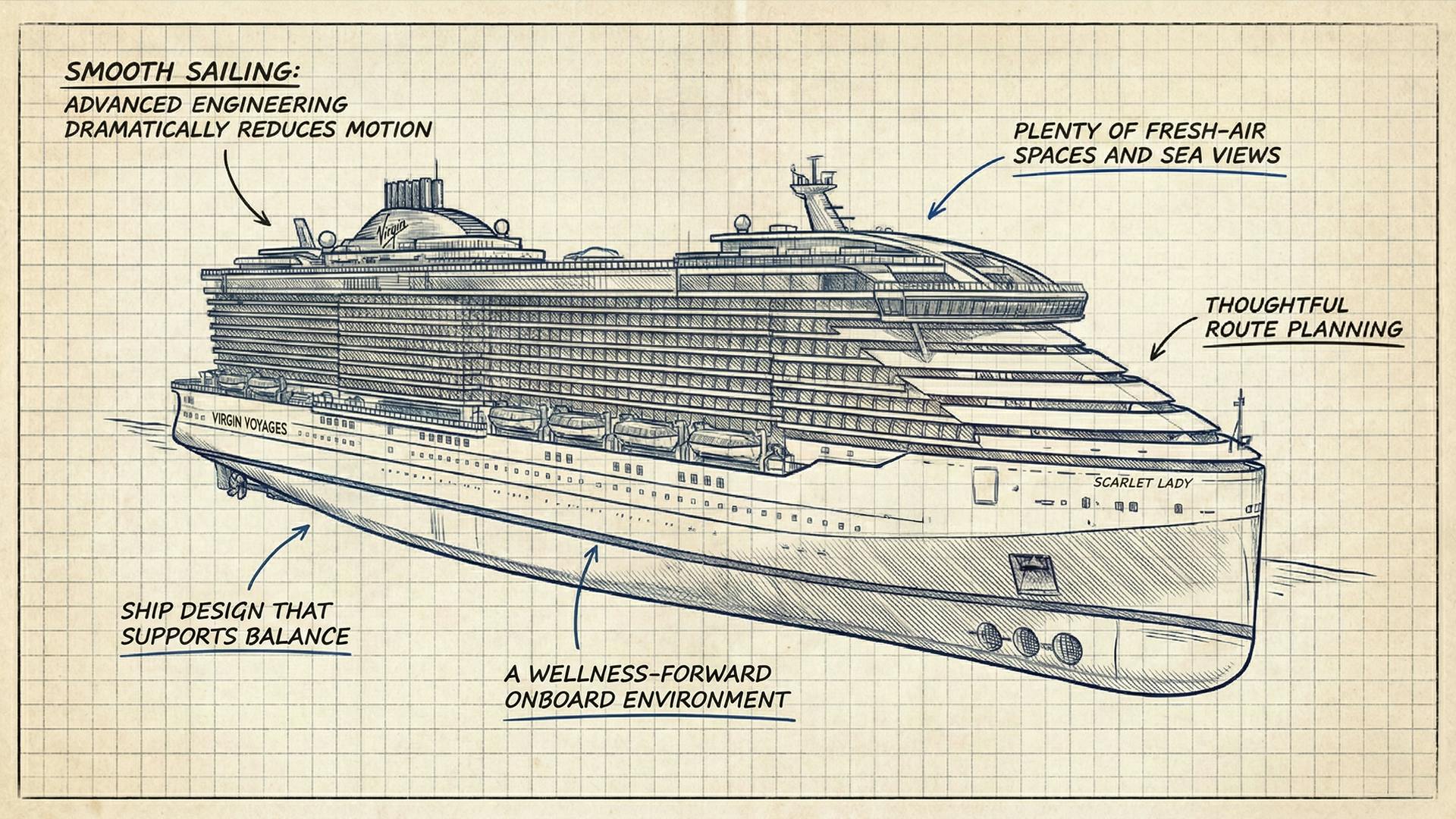
Here’s the good news: modern cruise ships, including the four elegant lady ships in our fleet, are designed to dramatically reduce motion, and most Sailors are pleasantly surprised by how smooth sailing actually feels. Between advanced ship engineering, thoughtful route planning, and a few onboard comforts, seasickness has become way less common than its reputation suggests.
What actually causes seasickness?
Seasickness happens when your body receives mixed messages. Your inner ear senses movement, but if your eyes don’t see it (or vice versa), your brain protests with nausea or dizziness.
That same mismatch is why motion sickness can happen in cars or planes, too. And while it’s a common concern, it doesn’t mean cruising is off the table — especially not on today’s ships.
How modern cruise ships reduce motion at sea
Cruising today looks very different from decades past, because ships have evolved in ways that significantly improve comfort.
Advanced stabilizers help keep things smooth
Most modern cruise ships use stabilizer systems, which look a bit like underwater fins that counteract the rolling motion caused by waves. These systems automatically adjust based on sea conditions, helping to keep the ship balanced.
Rhea Wilson, our Chief Engineer, explains that ship parts called engines, bow thrusters, and azipods (motors with a built-in propeller and rudder) are what create the magic combination to keep sailing smooth.
Smart sailing and routing matter too
Captains carefully plan routes around seasonal weather patterns and sea conditions. They can also adjust speed and direction to reduce motion when needed — all part of keeping the ride as calm as possible.
What Virgin Voyages does to help keep Sailors comfortable
We approach comfort the same way we approach everything else onboard — thoughtfully, intentionally, and without unnecessary fuss.
Ship design that supports balance
Our lady ships are engineered with modern hull design and balanced weight distribution to support smoother sailing. While no ship can eliminate motion entirely, every element is designed to minimize it.
Plenty of fresh-air spaces and sea views
Our open decks, outdoor lounges, and sea-view spaces aren’t just great for sunset photos — they can also help your body adjust more easily to being at sea. Our newest ship, Brilliant Lady, has a new design featuring reworked outer decks, more sea-facing indoor seating, and outward-facing daybeds at the Athletic Club — so you can get fresh air and, while you’re at it, make sure never to miss a sunset.
A wellness-forward onboard environment
We place a strong emphasis on wellness, with thoughtfully prepared dining and hydration stations, outdoor movement spaces, an onboard spa, and more. All of this supports how your body adapts to life on the ocean.
Where you’ll feel the least motion onboard
If you’re especially sensitive, location can make a difference. Take a look at our deck plans to see where you’d like to end up cabin-wise.
Midship cabins stay steadier
The center of the ship typically experiences the least motion, making midship cabins a popular choice for Sailors concerned about seasickness.
Lower decks feel smoother than higher ones
Motion tends to increase the higher you go. Lower-deck cabins often feel more stable, especially during sea days.
Fresh air and horizon views help
Spending time outside and focusing on the horizon can help your senses sync more quickly, which often eases discomfort.
Simple tips to prevent seasickness (just in case)
Most Sailors never experience seasickness on board our lady ships — check out our online reviews (where Sailors call us “phenomenal” and “impressively stable,” among other compliments) if you need convincing! All the same, a little preparation never hurt anyone. Follow these guidelines on board to keep yourself feeling ship-shape.
- Above all, stay hydrated!
- Eat light meals and mild, starch-heavy food if you’re feeling off (that means grabbing toast and a banana at The Galley, and saving the decadent surf-and-turf at The Wake for another night)
- Get fresh air regularly
- Avoid staring at screens during rough conditions
- Choose a midship, lower-deck cabin if you’re sensitive
Often, peace of mind is half the battle. But if peace of mind isn’t enough, we also have a friendly Medical Services Crew available on Deck 4 of all of our ships if you’re really feeling it and want to talk to a professional.
Is cruising still right for people worried about seasickness?
In short: yes.
For most travelers, seasickness is mild, brief, or nonexistent on modern cruise ships. Many first-time Sailors are surprised by how steady everything feels, even on sea days.
And with Virgin Voyages, our adults-only atmosphere, abundance of outdoor spaces, and wellness-forward culture on our ships all make it even easier to settle into a comfortable rhythm at sea.
Smooth sailing starts with the right ship
Seasickness doesn’t have to stand between you and a great vacation. With today’s ship design, stabilizers, and experienced crews, cruising has never felt smoother. If motion concerns have held you back, consider this your reassurance: modern cruising is built for comfort.
Ready to experience the modern romance of sailing for yourself? Explore our itineraries and see how smooth sailing can feel aboard Virgin Voyages.